WASHINGTON (Reuters) -- NASA satellites have helped scientists learn about the hard-to-find Antarctic Ocean "oases" where penguins feast and thrive, researchers said.
These "oases" are actually warm patches in the normally ice-covered ocean along Antarctica's coast, enabling massive stretches of open water to support the microscopic plants that are the base of a food chain that ultimately feeds penguins as well as whales, seals and other animals.
Some of these stretches of open water, known as polynyas, are as big as mini-oceans themselves -- at least one is the size of California -- but because they are surrounded by ice, they are impossible to see by ship.
For this reason, satellite data was used to analyze the plant life in these areas, Gert van Dijken of Stanford University said Tuesday.
"A lot of these polynyas have never been studied, you can't see them from boats," van Dijken said. "The only way to study them is by satellite."
It was simple enough, he said in a telephone interview: "We used different kinds of satellites to look at the sea ice so we could see how much open water there was, and we used the ocean color sensor, to look at the color of the ocean."
Using a special formula, researchers figured out that if the water was green, it was chock full of phytoplankton, the tiny plants that nourish minuscule shrimp-like creatures called krill. Krill are on the menu for many larger Antarctic creatures, notably the Adelie penguins whose population thrives on some of these oases, van Dijken said.
MORE...
Articoli Correlati



Ultimi Articoli

Fibra ottica in provincia di Como: 145 comuni nel Piano Bul, oltre 144.000 immobili attivabili

Leone, il neonato ritrovato a Cinisello Balsamo respira senza supporto

Gaza, dalla Lombardia altri 150mila euro per acqua e assistenza agli sfollati

Milano premia i suoi protagonisti: a Palazzo Marino otto “Volti della Metropoli” che raccontano il futuro della città

Premio Volti della Metropoli: a Palazzo Marino i riconoscimenti alla VI edizione

Milano celebra i suoi protagonisti: torna il Premio “Volti della Metropoli”
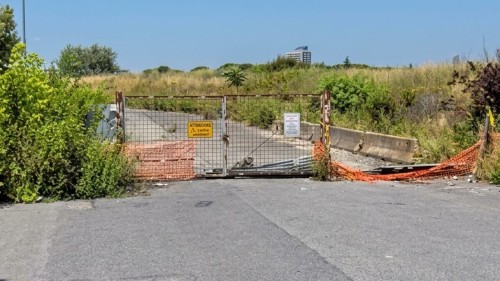
Roma, talenti, Via Antamoro, vent’anni di attesa: ma chi paga il prezzo delle promesse rimaste sulla carta?

Winners Cup 2026, oltre 200 giovani pazienti oncologici in campo a Milano

GAROFANO, IL RIS E QUELLE DOMANDE CHE IL GIORNALISMO NON PUÒ PIÙ ELUDERE.