The Genesis team is preparing to ship its samples of the Sun from the mission's temporary cleanroom at the U.S. Army Proving Ground, Dugway, Utah, to NASA's Johnson Space Center, Houston.
"We have essentially completed the recovery and documentation process and now are in the business of preparing everything for transport," said Eileen Stansbery, Johnson Space Center assistant director of astromaterials research and exploration science. "We still have a way to go before we can quantify our recovery of the solar sample. I can tell you we have come a long way from September 8, and things are looking very, very good."
A major milestone in the process was the recovery of the Genesis mission's four separate segments of the concentrator target. Designed to measure the isotopic ratios of oxygen and nitrogen, the segments contain within their structure the samples that are the mission's most important science goal.
"Retrieving the concentrator target was our number one priority," Stansbery said. "When I first saw three of the four target segments were intact, and the fourth was mostly intact, my heart leapt. Inside those segments are three years of the solar samples, which to the scientific community, means eons worth of history of the birth of our solar system. I saw those, and I knew we had just overcome a major hurdle."
Other milestones in the recovery process included the discovery that the gold foil collector was undamaged and in excellent condition. The gold foil, which is expected to contain almost a million billion atoms of solar wind, was considered the number two priority for science recovery. The polished aluminum collector was misshapen by the impact. However, it is intact and expected to also yield secrets about the Sun. Another occurred when the cleanroom team disassembled the collector arrays. They revealed, among large amounts of useable array material, some almost whole sapphire and coated sapphire collectors and a metallic glass collector.
Packing solar samples for transport is a little different than packing a house-worth of belongings for a cross-country move. After the meticulous process of inspection and documentation, each segment of collector gets its own ID number, photograph and carrying case. The samples and shipping containers fill the space of about two full size refrigerators. The Genesis material will probably move to the Johnson Space Center within the next week.
"If you had told me September 8 that we would be ready to move Genesis samples to Houston within the month I would have replied,'no way,'" said Genesis Project Manager Don Sweetnam of NASA's Jet Propulsion Laboratory, Pasadena, Calif. "But here we are, with an opportunity to fulfill our major science objectives. It is a great day for Genesis, and I expect many more to come."
For more information about the Genesis mission on the Internet, visit
http://www.nasa.gov/genesis
For background information about Genesis on the Internet, visit
http://genesismission.jpl.nasa.gov
Articoli Correlati



Ultimi Articoli

Youth and Future a Palazzo Reale: le parole dei giovani diventano opere d’arte

Fibra ottica in provincia di Como: 145 comuni nel Piano Bul, oltre 144.000 immobili attivabili
Leone, il neonato ritrovato a Cinisello Balsamo respira senza supporto

Gaza, dalla Lombardia altri 150mila euro per acqua e assistenza agli sfollati
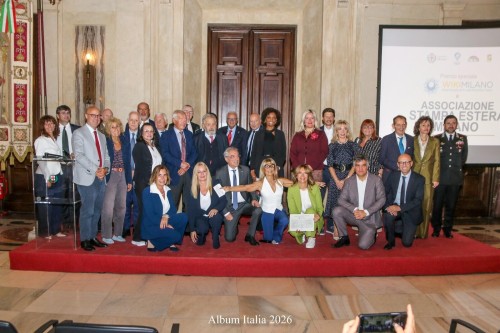
Milano premia i suoi protagonisti: a Palazzo Marino otto “Volti della Metropoli” che raccontano il futuro della città

Premio Volti della Metropoli: a Palazzo Marino i riconoscimenti alla VI edizione

Milano celebra i suoi protagonisti: torna il Premio “Volti della Metropoli”

Roma, talenti, Via Antamoro, vent’anni di attesa: ma chi paga il prezzo delle promesse rimaste sulla carta?

Winners Cup 2026, oltre 200 giovani pazienti oncologici in campo a Milano